
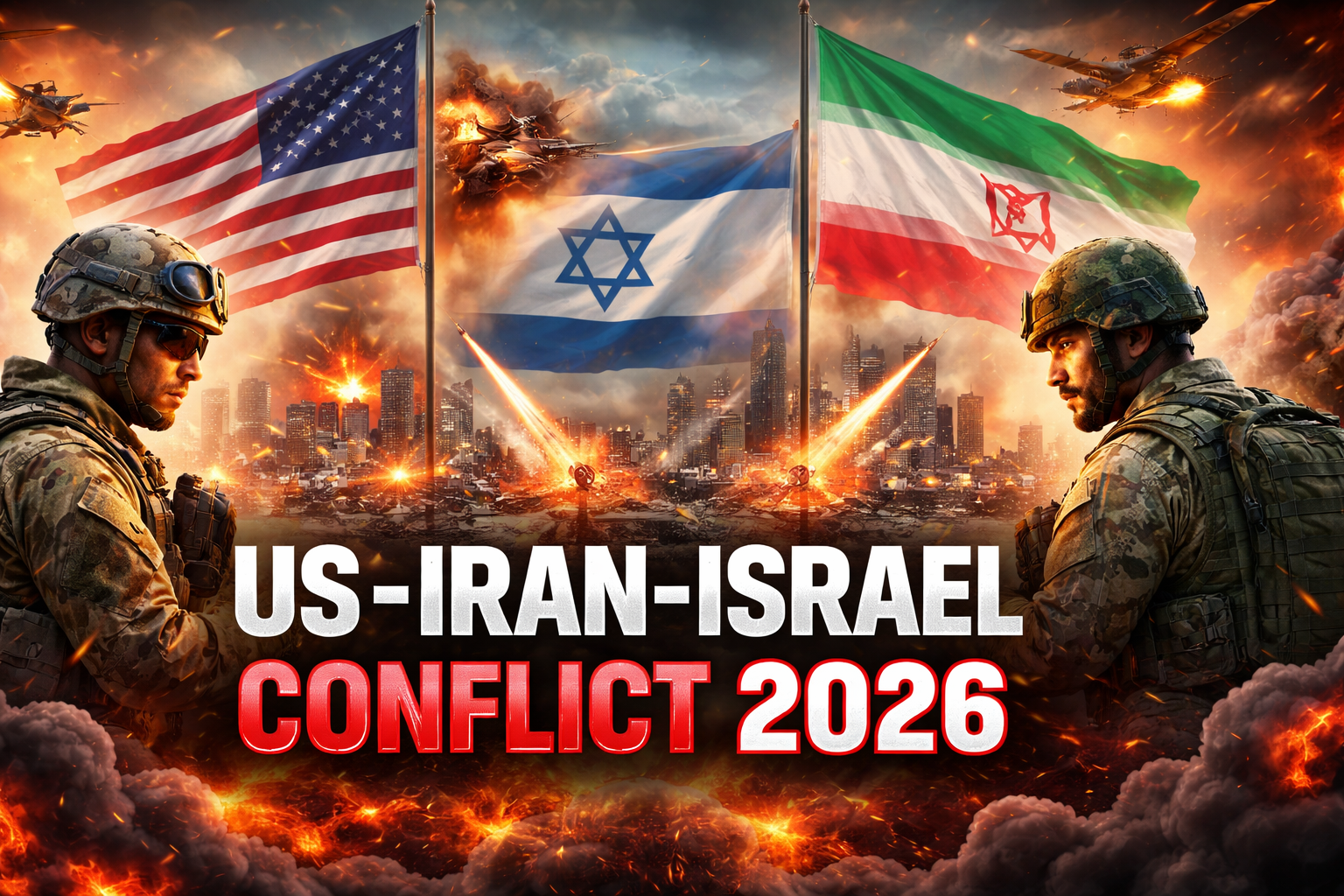
In late February 2026, the Middle East entered a highly volatile phase of conflict. On February 28, 2026, the United States and Israel launched coordinated strikes on several Iranian military and strategic locations. Israel named the operation “Operation Lion’s Roar”, while the United States conducted its part under a joint military strategy.
The official objective was to disrupt Iran’s nuclear program and reduce its military capabilities. However, the immediate result has been a dramatic escalation, bringing the entire region into a tense war footing. Iran responded with missile and drone attacks targeting Israeli cities and U.S. military bases.
This conflict is no longer limited to three nations; it has significant implications for Lebanon, Syria, the Gulf region, and international shipping lanes. The war has evolved into a multidimensional struggle for regional influence, military superiority, and geopolitical control.
America Under Pressure: Military Power Confronted by Political and Strategic Challenges
The United States remains the world’s most powerful military force, but this war has placed considerable pressure on multiple fronts.
Political Pressure – The U.S. government must justify to its citizens and international allies the necessity of aggressive military action against Iran. Debates within Congress and among the American public are intensifying, particularly regarding the potential costs of a prolonged conflict.
Military Pressure – U.S. forces must protect multiple bases, aircraft carriers, and naval operations in the Gulf while maintaining offensive operations within Iran. This extensive deployment requires careful coordination, logistical support, and constant readiness against potential counterattacks.
Economic Pressure – The Strait of Hormuz, a vital shipping route for global oil supply, is under threat. Any closure or disruption could trigger a global energy crisis, with severe consequences for international markets.
Despite its superior military capability, the United States faces a delicate balancing act between offensive operations, regional stability, and global economic considerations.
Israel’s Situation: Civilian Fear and National Emergency
Israel is bearing the immediate brunt of the conflict. Iran has launched multiple missile and drone attacks on Israeli territory. While the Iron Dome defense system intercepts many incoming projectiles, some attacks have reached urban areas, causing casualties and property damage.
Major cities including Tel Aviv, Haifa, and Jerusalem are under a state of continuous alert. Schools have been closed, public gatherings restricted, and citizens frequently seek refuge in bomb shelters. Nighttime sirens and missile alerts have become a constant part of daily life, placing immense psychological pressure on the population.
Additionally, the militant group Hezbollah in Lebanon has intensified attacks on Israel, creating a two-front pressure scenario that further complicates Israel’s defense strategy. Civilians are coping with uncertainty, fear, and a disrupted daily life, making the humanitarian impact of this conflict increasingly severe.
Iran’s War Preparations: Strategic Planning for a Prolonged Conflict
Iran has spent years preparing for a potential confrontation of this magnitude. Its strategy is multi-faceted and relies on asymmetric warfare rather than traditional direct engagements.
Missile and Drone Arsenal
Iran possesses thousands of ballistic missiles and advanced drones capable of striking long-distance targets. This allows Iran to project power against Israeli cities and U.S. assets without direct border confrontations.
Proxy Network
Iran has developed a network of allied groups across the Middle East, including:
Hezbollah in Lebanon
Armed militias in Iraq
Pro-Iranian forces in Syria
These proxy forces extend Iran’s operational reach and allow simultaneous attacks on multiple fronts, a key component of Iran’s strategic doctrine.
Long-Term Conflict Strategy
Iranian leadership has publicly stated that it is prepared for a prolonged regional conflict. The strategy combines military action with economic pressure and regional destabilization, allowing Iran to sustain resistance against superior conventional forces.
The Risk of a Regional Escalation
If the conflict escalates further, the war could extend beyond Iran and Israel. Potential scenarios include:
Full-scale involvement of Lebanon via Hezbollah
Naval clashes in the Persian Gulf
Disruption of international shipping lanes
Broader regional instability
Such escalation would create a major security crisis in the Middle East, with global implications.
Global Impact: Why the World Is Watching Closely
The consequences of this conflict are not limited to the Middle East:
Oil Market Volatility – Any disruption in Gulf oil exports could trigger significant increases in global energy prices.
Trade Disruption – Key maritime routes may be compromised, affecting international commerce.
Shifting Alliances – Global powers, including Europe, China, and Russia, are monitoring the situation, with potential adjustments to diplomatic and military strategies.
Economic Shock – A prolonged conflict could destabilize markets worldwide, impacting both developed and developing economies.
The international community is closely watching this war, aware that a regional conflict could escalate into a global security crisis.
Conclusion: A Conflict with an Uncertain Outcome
Several realities are clear in the current scenario:
The United States, while militarily powerful, faces significant political and economic pressure.
Israel, despite advanced defenses, is under continuous threat, with civilians experiencing severe disruption and fear.
Iran appears strategically prepared for a prolonged conflict, leveraging both direct and proxy warfare.
Diplomacy remains critical, but if negotiations fail, this conflict could continue for months or even years, with far-reaching consequences for regional and global stability.
The official objective was to disrupt Iran’s nuclear program and reduce its military capabilities. However, the immediate result has been a dramatic escalation, bringing the entire region into a tense war footing. Iran responded with missile and drone attacks targeting Israeli cities and U.S. military bases.
This conflict is no longer limited to three nations; it has significant implications for Lebanon, Syria, the Gulf region, and international shipping lanes. The war has evolved into a multidimensional struggle for regional influence, military superiority, and geopolitical control.
America Under Pressure: Military Power Confronted by Political and Strategic Challenges
The United States remains the world’s most powerful military force, but this war has placed considerable pressure on multiple fronts.
Political Pressure – The U.S. government must justify to its citizens and international allies the necessity of aggressive military action against Iran. Debates within Congress and among the American public are intensifying, particularly regarding the potential costs of a prolonged conflict.
Military Pressure – U.S. forces must protect multiple bases, aircraft carriers, and naval operations in the Gulf while maintaining offensive operations within Iran. This extensive deployment requires careful coordination, logistical support, and constant readiness against potential counterattacks.
Economic Pressure – The Strait of Hormuz, a vital shipping route for global oil supply, is under threat. Any closure or disruption could trigger a global energy crisis, with severe consequences for international markets.
Despite its superior military capability, the United States faces a delicate balancing act between offensive operations, regional stability, and global economic considerations.
Israel’s Situation: Civilian Fear and National Emergency
Israel is bearing the immediate brunt of the conflict. Iran has launched multiple missile and drone attacks on Israeli territory. While the Iron Dome defense system intercepts many incoming projectiles, some attacks have reached urban areas, causing casualties and property damage.
Major cities including Tel Aviv, Haifa, and Jerusalem are under a state of continuous alert. Schools have been closed, public gatherings restricted, and citizens frequently seek refuge in bomb shelters. Nighttime sirens and missile alerts have become a constant part of daily life, placing immense psychological pressure on the population.
Additionally, the militant group Hezbollah in Lebanon has intensified attacks on Israel, creating a two-front pressure scenario that further complicates Israel’s defense strategy. Civilians are coping with uncertainty, fear, and a disrupted daily life, making the humanitarian impact of this conflict increasingly severe.
Iran’s War Preparations: Strategic Planning for a Prolonged Conflict
Iran has spent years preparing for a potential confrontation of this magnitude. Its strategy is multi-faceted and relies on asymmetric warfare rather than traditional direct engagements.
Missile and Drone Arsenal
Iran possesses thousands of ballistic missiles and advanced drones capable of striking long-distance targets. This allows Iran to project power against Israeli cities and U.S. assets without direct border confrontations.
Proxy Network
Iran has developed a network of allied groups across the Middle East, including:
Hezbollah in Lebanon
Armed militias in Iraq
Pro-Iranian forces in Syria
These proxy forces extend Iran’s operational reach and allow simultaneous attacks on multiple fronts, a key component of Iran’s strategic doctrine.
Long-Term Conflict Strategy
Iranian leadership has publicly stated that it is prepared for a prolonged regional conflict. The strategy combines military action with economic pressure and regional destabilization, allowing Iran to sustain resistance against superior conventional forces.
The Risk of a Regional Escalation
If the conflict escalates further, the war could extend beyond Iran and Israel. Potential scenarios include:
Full-scale involvement of Lebanon via Hezbollah
Naval clashes in the Persian Gulf
Disruption of international shipping lanes
Broader regional instability
Such escalation would create a major security crisis in the Middle East, with global implications.
Global Impact: Why the World Is Watching Closely
The consequences of this conflict are not limited to the Middle East:
Oil Market Volatility – Any disruption in Gulf oil exports could trigger significant increases in global energy prices.
Trade Disruption – Key maritime routes may be compromised, affecting international commerce.
Shifting Alliances – Global powers, including Europe, China, and Russia, are monitoring the situation, with potential adjustments to diplomatic and military strategies.
Economic Shock – A prolonged conflict could destabilize markets worldwide, impacting both developed and developing economies.
The international community is closely watching this war, aware that a regional conflict could escalate into a global security crisis.
Conclusion: A Conflict with an Uncertain Outcome
Several realities are clear in the current scenario:
The United States, while militarily powerful, faces significant political and economic pressure.
Israel, despite advanced defenses, is under continuous threat, with civilians experiencing severe disruption and fear.
Iran appears strategically prepared for a prolonged conflict, leveraging both direct and proxy warfare.
Diplomacy remains critical, but if negotiations fail, this conflict could continue for months or even years, with far-reaching consequences for regional and global stability.
Discussion
0 comments💭
No comments yet. Be the first to share your thoughts!
💝 Subscribe to join the discussion and share your thoughts.